Hail damage on roof surfaces is one of the most common issues Minneapolis homeowners face after a storm, especially during Minnesota’s peak storm season. According to the National Weather Service, hail causes nearly $1 billion in damage across the United States each year.
Hail can quietly damage your roof even when everything looks fine from the ground. In fact, most homeowners don’t notice roof damage until it turns into a leak or a much bigger problem. That’s why understanding the warning signs matters.
In this guide, we’ll walk you through:
- What does hail damage look like on roof surfaces
- How wind and water damage often follow hail damage
- Safe ways to check your home for damage after a storm
- When it’s time to bring in a professional roofing company
Understanding Storm Damage Types on Minnesota Roofs
Storm damage in the Minneapolis–St. Paul area usually comes from a mix of hail, wind, and water. Each type impacts your roof differently, but together they can weaken its structure and shorten its lifespan.
- Hail damage: Most frequent during spring and summer storms
- Wind damage: Caused by strong gusts across open terrain
- Water damage: Often develops after initial roof damage
Minnesota’s climate adds another layer of risk. Its freeze-thaw cycles, rapid temperature swings, and heavy snow buildup can turn small issues, like lifted shingles or minor cracks, into bigger problems over time.
Hail Damage Characteristics
Hail damage can vary depending on the size, density, and speed of the hailstones during a storm. Understanding how to identify hail damage on a roof can help you catch issues before they worsen.
- Pea-sized hail: Often causes light granule loss that may not be immediately noticeable
- Quarter to golf ball-sized hail: More likely to create visible impact marks, cracks, and exposed areas
When hail strikes your roof, it can:
- Knock away protective granules from shingles
- Expose the underlying mat layer
- Leave behind circular dents or “bruised” spots
Roof repair in Minneapolis aims to address damage before it causes leaks.
Wind Damage Indicators
Wind damage often affects shingle security but doesn’t affect their appearance at first glance.
Common signs of wind damage include:
- Lifted or curling shingles
- Missing shingles after strong gusts
- Exposed underlayment in affected areas
Minnesota’s prairie winds may not always tear shingles off completely, but they can break the seal that keeps them in place. After a compromised seal, your roof becomes more vulnerable to future storms and moisture intrusion.
Water Damage Progression
Water damage is typically the result of hail or wind damage that has gone unnoticed or untreated.
Once your roof has weak spots, water can seep in and cause:
- Interior leaks or ceiling stains
- Damaged insulation in the attic
- Long-term structural issues
During Minnesota’s freeze-thaw cycles, water enters small cracks and expands as it freezes, widening those openings. Later, when it thaws, even more moisture gets in, creating a cycle that gradually worsens the damage.
Visual Signs of Hail Damage on Your Roof
If you’re wondering how to tell if you have hail damage on your roof, the signs can vary based on your roof’s material and the severity of the storm. Common warning signs to look for include:
- Dark or bare spots where granules are missing
- Circular impact marks on shingles
- Soft or bruised areas
- Granules in gutters or downspouts
- Cracks or splits after larger hail
Once you know how to determine hail damage on the roof, consider its severity:
- Minor damage: Light granule loss, no immediate leaks, may shorten lifespan
- Moderate damage: Visible impact marks, exposed areas, higher leak risk
- Severe damage: Cracked or missing shingles, heavy granule loss, needs immediate attention
Next, let’s break down how hail damage on the roof varies by material:
Asphalt Shingle Damage Patterns
If you’re wondering, what does hail damage look like on a shingle roof, look for:
Granule loss
- Patchy or uneven shingles
- Darker substrate visible
Exposed black mat
- Protective layer removed
- Leaves shingles vulnerable
Cracks or fractures
- Caused by larger hail
- Can lead to leaks
Before vs. after
- Before: even color
- After: dark spots, dents, or missing granules
Metal Roofing Hail Damage
Metal roofs are durable, but signs of hail damage on roof areas may look different. Common signs include:
- Dents or dimpling
- Cosmetic surface damage
- Chipped or scratched coating
Tile and Alternative Material Damage
Tile and other premium materials, while less common in Minnesota, are rigid and tend to crack rather than dent. Look for:
- Cracked or broken tiles
- Chipped edges
- Displaced pieces
- Impact fractures
How to Safely Inspect Your Roof for Storm Damage
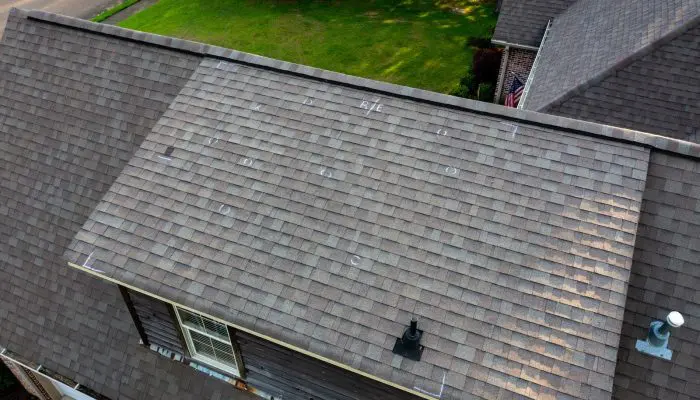
Most homeowners can spot early signs of hail damage on the roof without climbing up. A simple ground-level check can help you catch problems early and avoid unnecessary risk.
Ground-Level Inspection Techniques
You can often identify storm damage from the ground using a few simple steps:
- Use binoculars to scan for dark spots, dents, or missing shingles
- Check gutters and downspouts for loose granules or debris
- Look around your yard for fallen roofing materials
- Inspect siding, windows, and metal surfaces for dents (these often match roof damage)
Photographic Documentation Best Practices
If you notice potential damage, document it right away. This creates a simple record you can reference later if the damage worsens or if you need to file an insurance claim.
- Take wide shots of your roof and exterior
- Capture close-ups of any visible damage
- Use natural lighting for clearer detail
- Keep timestamps or dates for each photo
When Professional Inspection Is Required
Some situations call for a professional roofing company’s attention:
- You can’t safely access or clearly see the damage
- Signs of moderate to severe damage are present
- Damage patterns are unclear or widespread
Professional Assessment and Insurance Claims Process
When you’re uncertain how to determine hail damage on roof areas, a professional inspection is the next step. Experienced roofing professionals can spot issues that aren’t visible from the ground and provide a clear assessment.
In Minnesota, the process typically includes:
- A full roof inspection
- Documentation of damage
- Review of next steps for repair timing
Choosing a Qualified Roofing Contractor
Working with the right team matters.
Look for:
- Proper Minnesota licensing and insurance
- Local crews with established experience
- Clear, honest recommendations
Be cautious of:
- Out-of-state storm chasers
- High-pressure sales tactics
- Limited or unclear credentials
Asking these important questions upfront can help you avoid bigger issues later:
- Are you licensed and insured in Minnesota?
- How long have you worked in the Twin Cities area?
- Can you provide local references or recent projects?
- What does your inspection and estimate include?
- How do you handle unexpected damage found during repairs?
Insurance Claim Documentation Requirements
Good documentation helps support your claim. Avoid delays by documenting damage early and keeping your records organized. Missing or unclear information is one of the most common reasons claims get delayed.
Most policies require:
- Photos of damage
- Inspection reports
- Repair estimates
Timeline and Urgency Factors
Storm damage claims and repairs are time-sensitive.
Keep in mind:
- Minnesota policies often have filing deadlines
- Winter weather can delay repairs
- Projects may require temporary fixes before full replacement work begins
Hidden Damage: What You Can’t See From the Ground
Not all storm damage is visible from the outside. In many cases, problems develop over time after hail or wind has already weakened your roof.
Hidden damage can include:
- Slow leaks that lead to interior damage
- Moisture buildup in attic spaces
- Structural wear beyond the surface
Attic and Interior Inspection Signs
Your attic and interior spaces often show the first signs of trouble. After a storm, you can safely check your attic by using a flashlight to scan for moisture or discoloration and looking for light coming through the roof boards.
Look for:
- Water stains on ceilings or walls
- Damp or damaged insulation
- Poor ventilation or musty odors
If you notice active leaks or widespread staining, it’s a sign that you should schedule emergency roof repair.
Gutters and Drainage System Damage
Storms can also impact your drainage system, which plays a key role in protecting your roof.
Watch for:
- Dents or damage to gutters and downspouts
- Loose or misaligned sections
- Granule buildup from shingles
Damaged drainage systems can cause water to pool or flow improperly, making roof issues worse over time. These problems are often addressed alongside roof repairs with our professional gutter repair services.
Flashing and Penetration Damage
Flashing and roof penetrations around chimneys, roof vents, and skylights are among the most vulnerable areas during a storm. Hail and wind can:
- Loosen or crack flashing
- Break seals around openings
- Allow water to enter small gaps
Preventing Future Storm Damage
While you can’t control Minnesota weather, you can take steps to reduce how much damage your roof takes over time. The best approach includes:
- Upgrading to stronger, impact-resistant materials
- Keeping up with regular maintenance
- Addressing small issues before they grow
Preventive upgrades may cost more upfront, but they often reduce the need for repairs and extend the life of your roof. Especially in storm-prone areas like the Twin Cities, consider the cost-benefit analysis of upgrades.
Impact-Resistant Roofing Options
Some roofing materials are built to handle hail and severe weather better than others. In some cases, installing impact-resistant materials may also qualify for insurance discounts, depending on your policy. Popular residential roofing options include:
Class 4 shingles
- Designed to resist impact from hail
- Help reduce cracking and granule loss
Metal roofing
- Durable against hail and wind
- Less likely to crack compared to traditional materials
Regular Maintenance for Storm Readiness
Routine maintenance plays a valuable role in preventing hail damage on your roof. A simple plan includes:
Seasonal inspections
- Check your roof in spring and fall
Preventive repairs
- Fix loose shingles or flashing early
Property upkeep
- Trim overhanging branches
- Keep gutters clear and functioning
Frequently Asked Questions
How soon after a hailstorm should I inspect my roof for damage?
Inspect within 24–48 hours when it’s safe. Avoid climbing on the roof—look for signs like granules in gutters or check your attic for leaks or moisture.
Will my insurance cover hail damage repairs in Minnesota?
Most Minnesota policies cover unexpected storm damage, including hail. If you’ve experienced storm damage on your roof, document it and schedule a professional roof inspection right away.
Can small hail cause serious roof damage even if I don’t see obvious signs?
Yes. Even smaller hail can cause granule loss and hidden damage, leading to faster wear and future leaks.
Should I trust door-to-door craftsmen offering free roof inspections after storms?
Be cautious. Some are legitimate, but always verify licensing, insurance, and local experience before allowing anyone on your roof.
How do I know if roof damage requires immediate repair or can wait until spring?
Immediate issues include active leaks, missing shingles, or exposed areas. Less urgent damage may wait, but it’s best to have it assessed before winter conditions worsen.
Schedule Your Roof Inspection Today
With more than 60 years serving the Minneapolis–St. Paul area, American Eagle Home Improvement knows how quickly small storm damage can turn into costly repairs. We’re here to help you catch these issues early and protect your home from bigger problems down the road.
Schedule your inspection to get started.